One word, several architectures
Multiplayer can mean very different things inside an emulator. A fighting or sports game may originally run two players on one board, with both controllers feeding one game state. Making that game work across devices requires synchronized inputs, deterministic frame order, and desynchronization checks rather than an arcade network board.
SpatialEMU has a fixed-delay input-synchronization prototype for Virtua Fighter 3 Team Battle. Two isolated instances completed same-Mac tests, but cross-device acceptance is not complete and this remains research rather than a public feature.
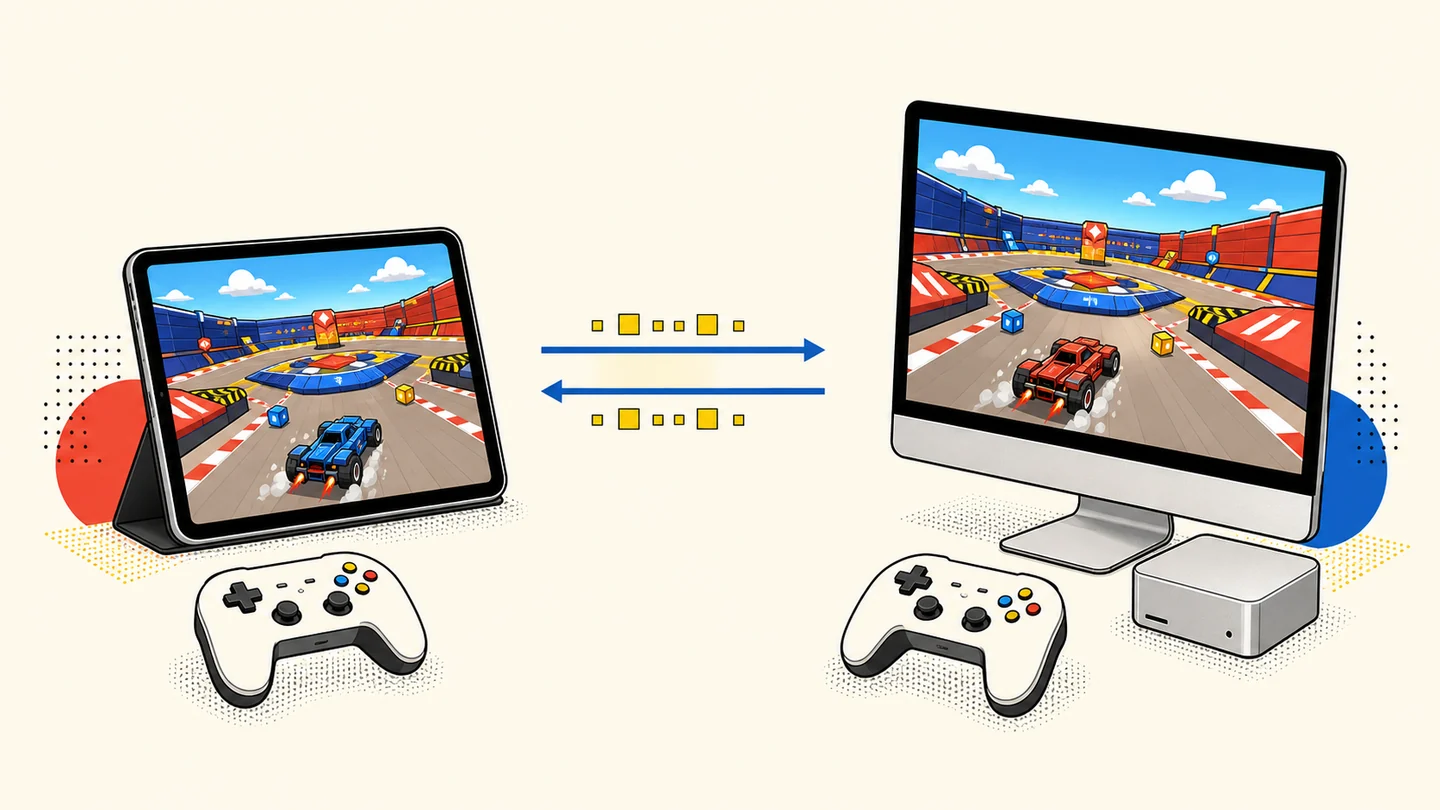
Two complete cabinets, one match
A native two-cabinet game is different. Each cabinet runs the full game, renders its own view, plays its own audio, and reads its own controller. The link carries the data that the original network board would have exchanged, not a video stream.
SpatialEMU presents this as Create Match and Join Match. The current exact-revision policy includes validated members of the Virtual-On 2, Daytona USA 2, Scud Race, Harley-Davidson and L.A. Riders, Ski Champ, Spikeout, and SEGA Rally 2 families. Parent or regional relationships never substitute for testing a specific revision.
All-playable cabinet rings
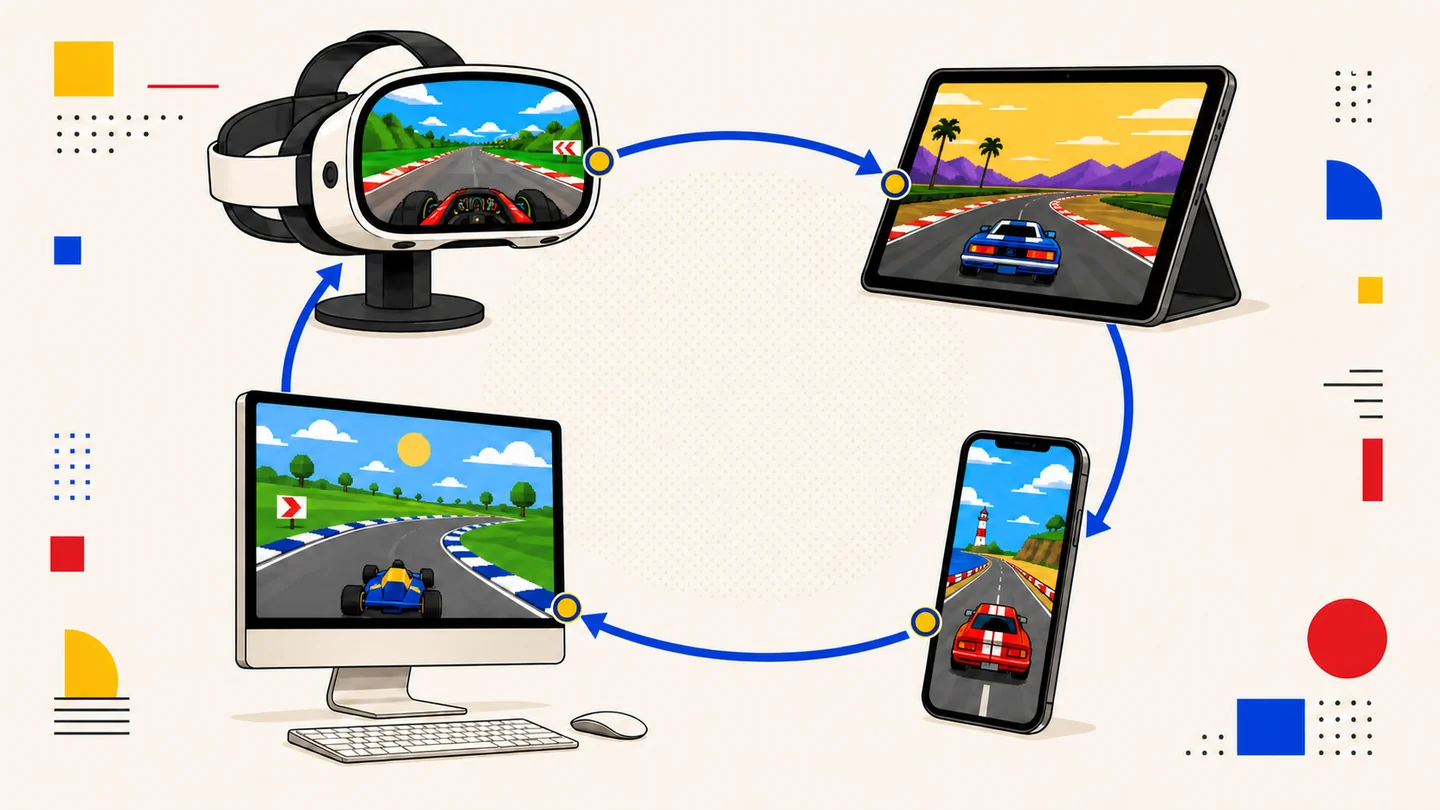
With three or more cabinets, the link can become a closed ring. Every node receives a complete frame from the previous cabinet and forwards the ring to the next. Cabinet identity, launch order, duplicate addresses, incomplete frames, and failure propagation all become part of the product rather than hidden configuration.
Daytona USA 2 keeps its classic two-cabinet route and adds an Experimental 3-8 Cabinet Ring. Eight simultaneous instances have passed automated gameplay and fault tests, but eight physical devices have not completed acceptance. SEGA Rally 2 Export is limited to Experimental three- and four-cabinet rooms. Its four-device game-level run passed on two Macs, an iPad, and an iPhone, including synchronized race, ranking, opponent, input, sustained exchange, disconnect, and fresh-session recovery evidence.
When device count exceeds player count
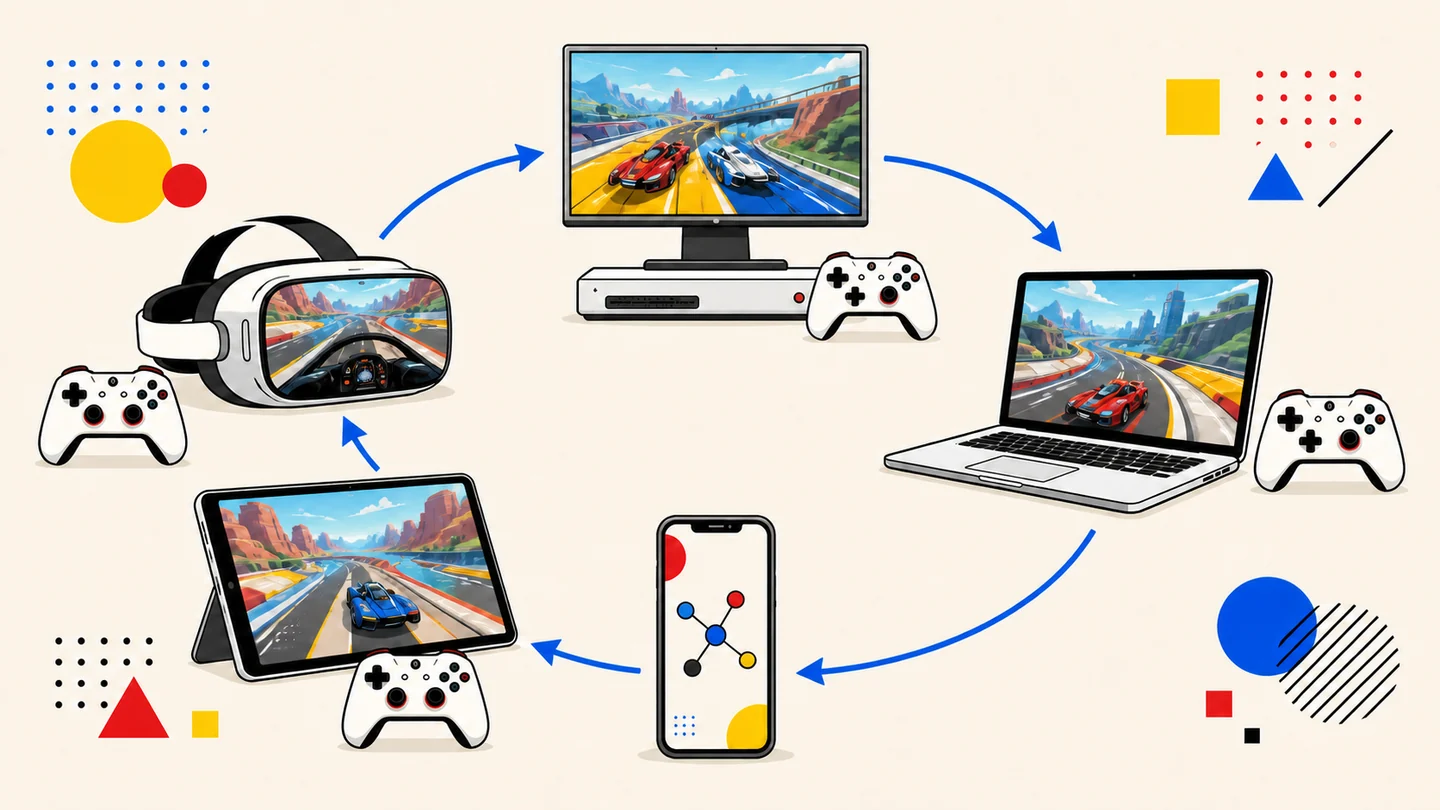
Some games require a satellite or relay node that does not represent another player. In SpatialEMU, Le Mans 24 supports two, three, or four playable cabinets plus one dedicated relay, producing rooms of three, four, or five devices.
The five-device physical data path was validated as Mac A to Mac B to iPad to Apple Vision Pro to iPhone relay to Mac A. The first four endpoints were playable; the iPhone completed the ring without accepting player input. This is why a four-player race can legitimately require five devices.
Built on established Model 3 research
SpatialEMU is not the first emulator to reproduce Model 3 networking. The official Supermodel project has supported network play on low-latency connections for years, and the Android project SUPER3 exposes raw Network, SimulateNet, AddressOut, PortIn, and PortOut controls.
Our contribution is productization rather than claiming invention of the underlying NetBoard work: title-specific room layouts, discovery and ordering, temporary cabinet-role profiles, exact ROM SHA-256 and runtime compatibility checks, explicit experimental boundaries, and evidence from mixed Apple-device topologies.
What SpatialEMU actually sends
The room control layer discovers members, locks cabinet order, validates identities, waits for readiness, and coordinates launch. The game data layer then follows the selected direct or ring topology and rejects incomplete or stale frames.
Every playable endpoint still runs and renders the complete game locally. SpatialEMU does not stream gameplay video between cabinets, and the current feature is intended for low-latency local networks rather than remote Internet rooms.
- Classic link: two playable devices
- Daytona USA 2 ring: three to eight playable nodes; eight-instance automation passed, eight-device physical acceptance pending
- SEGA Rally 2 Export ring: three or four playable nodes; four real devices passed on two Macs, iPad, and iPhone
- Le Mans 24 satellite ring: two to four players plus one relay; five physical endpoints passed with Vision Pro as a playable node
- Apple TV is not part of the current linked-play acceptance matrix
Files and compatibility boundaries
Every member must use a compatible SpatialEMU runtime and the same supported game revision with byte-identical data. SpatialEMU does not include games, ROMs, BIOS files, firmware, keys, or third-party downloads. Users provide files they have the right to use.